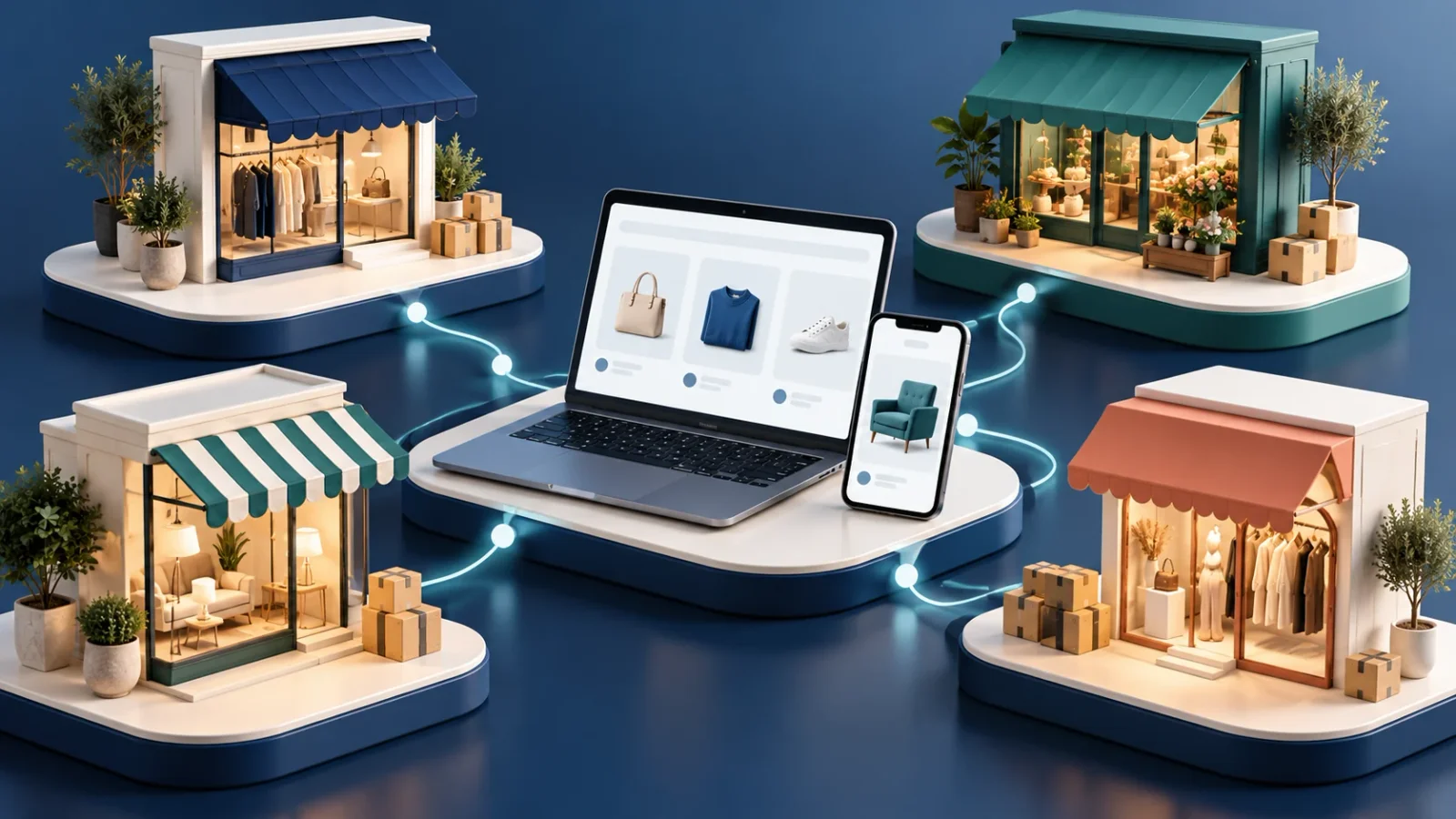
What to Sell Online in Late 2026: Global Demand Signals and Product Tests
Research cut-off: 3 November 2026. This DokanEasy analysis separates reported transactions, consumer surveys and our product-testing recommendations. It does not identify a verified worldwide number-one SKU or guarantee seller profits. Cate
Research cut-off: 3 November 2026. This DokanEasy analysis separates reported transactions, consumer surveys and our product-testing recommendations. It does not identify a verified worldwide number-one SKU or guarantee seller profits. Category growth is useful evidence, but country, channel, sourcing and fulfilment determine whether a particular product works.
If you want to know what to sell online now, start with a narrower question: which product can you source reliably, explain clearly and deliver profitably to a defined customer? The latest evidence points toward selective resale, practical electronics and travel accessories as worthwhile research areas. Fashion and beauty remain important cross-border categories, but neither should be treated as an automatic winner. Below is a market comparison and a concrete shortlist to test, rather than a viral-products shopping list.
What the international evidence actually measures
DHL’s 2026 E-Commerce Trends Report surveyed 29,000 online shoppers and 5,800 ecommerce businesses across 29 countries. It identifies clothing, electronics and beauty among prominent cross-border purchasing and selling categories. These are survey responses across covered markets, not a census of global retail transactions or a November bestseller chart.
Consumer Edge’s 16 October report uses US credit and debit card data for Q3 2026. Consignment/thrift spending increased 24.1% year on year, luggage/travel accessories 7.4%, and electronics/software 5.6%. Spending attributed to beauty fell 3.1%; the provider notes that TikTok Shop purchases are not attributed to individual beauty brands in this dataset. These are US channel/category signals, not worldwide product-unit sales.
Amazon and eBay: healthy platforms do not make every product a winner
For the quarter ended 30 September, Amazon’s official results, released 29 October report online-store revenue of US$68.47 billion, up 2% year on year. Total-company revenue grew 12%, but that includes AWS and other businesses. Prime Day moved into Q2 in most large countries, affecting quarter-to-quarter interpretation.
eBay’s Q3 2026 results report US$23.2 billion of GMV, up 15% as reported, and US$3.2 billion of revenue. The release also notes the July acquisition of Depop. GMV is not seller profit, and acquired businesses can affect comparisons. Do not compare eBay GMV directly with Amazon online-store revenue as if they were the same measure. Neither disclosure tells a new merchant which exact item will earn the highest margin.
1. Selective resale: the strongest directional signal in this shortlist
Evidence: The US thrift-spending increase and eBay’s reported marketplace activity support investigating recommerce. They do not establish the demand for any particular secondhand jacket, watch or device.
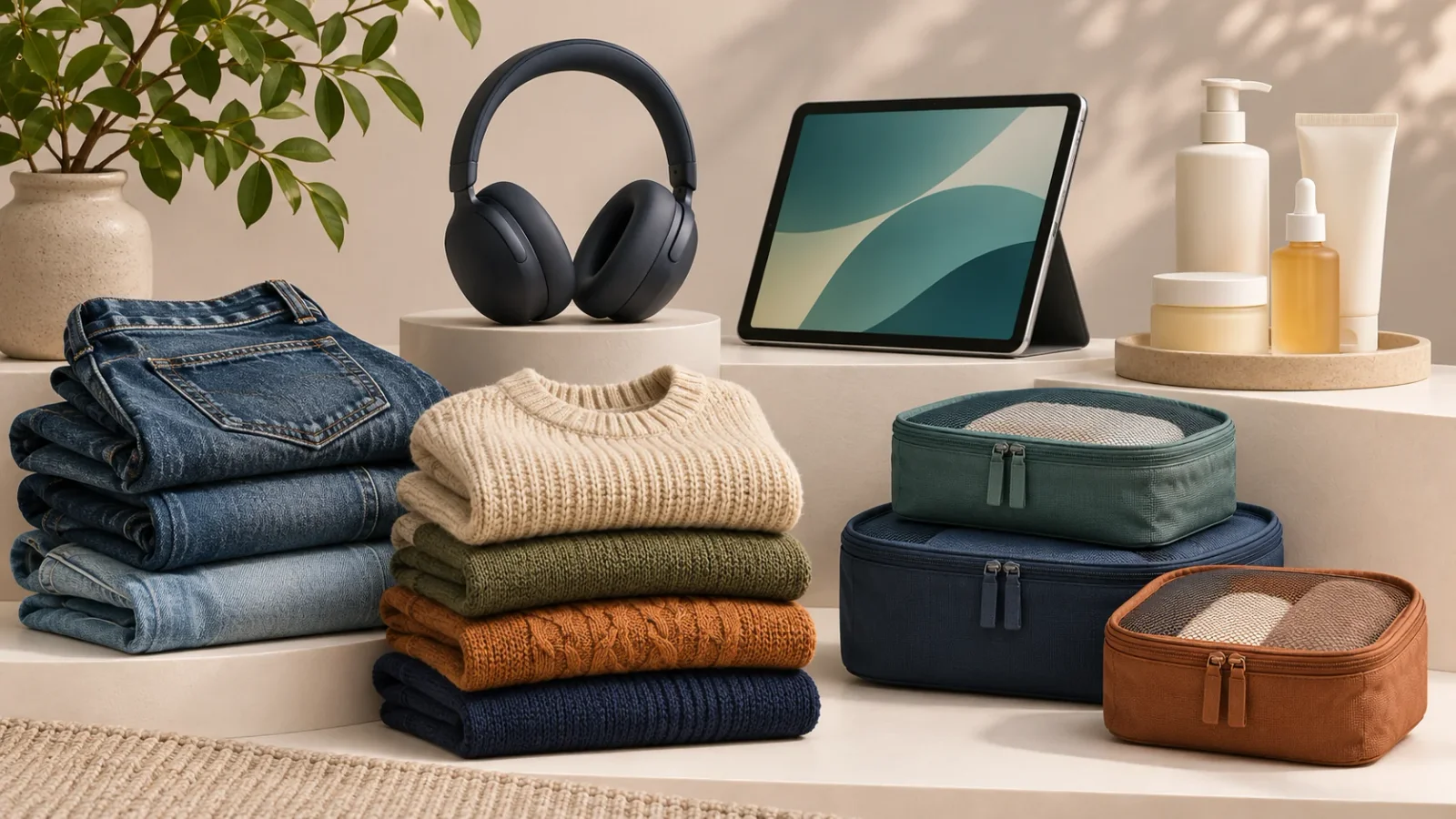
Our test candidates: clean, accurately measured denim, knitwear and preowned bags from traceable sources. These are editorial suggestions, not verified bestselling SKUs. Start with a small assortment and photograph the actual item, including wear. Build cleaning, inspection, photography time and condition-related returns into the cost. If sourcing quality varies too much, a promising category can still be a poor business for you.
2. Travel accessories: test usefulness before novelty
Evidence: The US luggage/accessories signal is positive, but it does not prove that packing cubes or luggage straps individually grew at the same rate.
Our test candidates: packing organisers, washable shoe bags and compact document organisers. Prefer a clear use case over an exaggerated travel claim. Measure dimensions, zip durability and packed shipping weight. Offer bundles only when the saving remains attractive after fulfilment. Separate destination countries and travel seasons in the test; a Northern Hemisphere holiday pattern is not a global calendar.
3. Electronics: favour compatibility and documented quality
Evidence: Electronics appears in the international survey, while the US spending category combines hardware and software. That combined growth cannot be assigned to a particular charger or headphone.
Our test candidates: non-powered laptop stands, device sleeves and clearly specified accessory kits. Sellers with testing and warranty capability can investigate refurbished devices separately. Powered products need a more demanding quality check: verify supplier documentation, specifications and applicable destination requirements. Battery shipping, defects and warranty handling can outweigh an attractive purchase price. Never use an unknown supplier’s claimed safety certification as your only evidence.
4. Fashion: differentiation matters more than copying a broad trend
Our interpretation: cross-border clothing interest makes fashion worth examining, but a broad category is not a product strategy. Test a defined customer need, such as a specific fit, fabric or occasion. Use actual garment measurements and fabric descriptions. Limit early colour and size combinations so cash is not trapped in slow variants. For a Bangladesh-based exporter, a documented local textile supply chain may be an advantage; overseas demand for that exact offer still needs paid-order validation.
5. Beauty: mixed signals require extra discipline
Our interpretation: the cross-border survey and the US card dataset describe different populations and channels, so their beauty signals are not necessarily contradictory. They are a reason to investigate, not to assume a universal boom or collapse.
Our test candidates: clearly sourced, sealed products with traceable batches and an appropriate shelf life, where you can meet the destination’s requirements. Verify supplier authenticity and permitted product claims. Compare repeat buying and customer complaints alongside acquisition cost. A strong-looking gross margin is not enough if stock expires or buyers distrust the source.
Which products would we prioritise for a small trial?
Our recommendation, not an observed global ranking: begin with useful, non-powered accessories if you need simpler fulfilment; prioritise selected resale if you already have reliable sourcing and inspection skills. Consider fashion where fit and supply quality differentiate you. Treat powered gadgets, fragile appliances and unfamiliar skincare as more demanding projects, rather than shortcuts to quick profit. This ordering reflects operational suitability, not measured category-wide profitability.
Check profitability with a delivered-order calculation
Calculate contribution after discounts: collected revenue minus product cost, inbound freight/duty, packaging, payment and marketplace fees, outbound shipping subsidy, advertising attributable to the order, and a realistic return/defect provision. That contribution still needs to cover overhead and tax; it is not net profit. Track refused deliveries and refunded orders instead of counting every checkout as earned revenue.
Illustrative example only: a US$30 collected order with US$10 product cost, US$2 inbound allocation, US$1 packaging, US$3 fees, US$5 delivery subsidy, US$4 acquisition cost and US$2 return provision leaves US$3 contribution. If acquisition cost rises to US$7, contribution falls to zero. These are invented teaching inputs, not market prices or expected returns.
Run a country-specific test before committing inventory
Choose one destination, one customer segment and a few clearly defined products. Record competitor prices and completed-sales evidence where available; listing counts and social views are not sales. Buy samples, document defects, publish original photos and set a test budget you can afford. Compare paid orders, delivered orders, return reasons and contribution over a defined period before reordering.
The strongest product opportunity is the overlap between credible demand, a sourcing advantage and workable unit economics. Use the signals above to select experiments, then let delivered customer orders decide what scales. For the local picture, read our Bangladesh product-demand and price analysis.